Brand Architecture: The Models, Examples, and How to Choose Yours
November 22, 2026
Brand architecture is the structure that organizes a company's brands, products, and sub-brands: which offerings carry the master name, which get their own identity, and how they all relate to each ot...
Design Collaboration: How Creative Teams Actually Work Together
November 22, 2026
Design collaboration is the working arrangement between everyone who touches a design: the designers who make it, the reviewers who mark it up, the clients who approve it, and the producers who keep i...
Visual Identity Guidelines: What to Include and How to Write Them
November 21, 2026
Visual identity guidelines are the written rules for how a brand looks: which logo files to use and where, which colors are allowed and in what proportion, which typefaces speak for the brand, and how...
Logo Guidelines: How to Write the Logo Section of Your Brand Guide
November 19, 2026
Logo guidelines are the rules that govern how your logo may be used: which version, at what size, with how much clear space, on which backgrounds, and in which file format. They live in the logo secti...
Brand Governance: What It Is and How to Build It
November 18, 2026
Brand governance is the decision structure a company wraps around its brand: which rules exist, who has the authority to make, change, and approve brand decisions, and how the rules get enforced when ...
How to Create a Brand Mood Board (With Examples)
November 16, 2026
A brand mood board is a single visual reference that collects the colors, imagery, typography, textures and words that describe the direction your brand should move in before anything is finalized. It...
Branding Promotion: How to Promote Without Breaking It
November 14, 2026
Branding promotion is the work of getting a brand in front of more of the right people while keeping every exposure consistent with the brand you built. The first half is what most articles cover: cha...
Metadata Tagging: How to Make Every Asset Findable
November 5, 2026
Metadata tagging is the practice of attaching creative asset metadata, structured descriptive information about your assets, so that a photo, logo, or video can be found by what it is and what it is f...
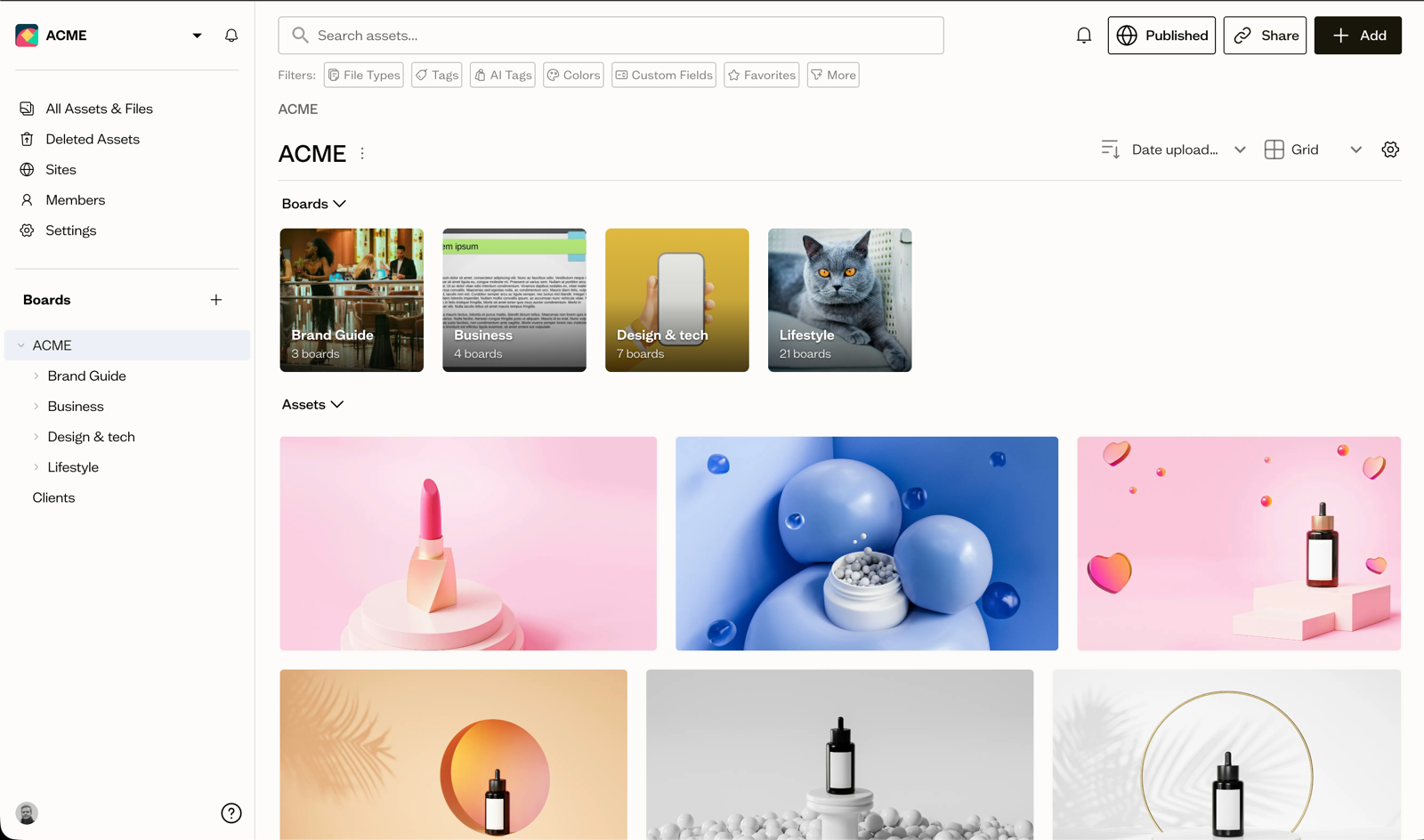
Creative Workflow Management: Stages, Failure Modes, and Fixes
November 3, 2026
Creative workflow management is the practice of moving a piece of creative work from request to approved, delivered asset through defined stages, with a named owner and an explicit status at each stag...
Living Brand Guidelines: Why Static PDFs Fail (And What Replaces Them)
September 12, 2026
Every brand guide starts the same way: someone builds a beautiful PDF, exports it, and sends it around. Three months later, the logo's been refreshed, the PDF hasn't, and half the team is still pullin...
Brand Asset Management: A Practical Framework for Creative Agencies
September 10, 2026
Search "brand asset management" and the top results are mostly glossary pages from DAM vendors like Bynder, Frontify, and Canto: a paragraph-long definition, then a pitch for their software. A few ind...
What Is a Brand Kit? Examples & What to Include
July 16, 2026
A brand kit is a curated set of the assets that represent your brand: your logo files, color palette, typography, and templates, organized so that anyone who needs to produce something on-brand can fi...
What Is a Brand Book? Definition, Examples & How to Build One
July 6, 2026
Ask five people on your team what a "brand book" is, and you'll get five different answers. A PDF from the design agency. A slide deck nobody's opened since onboarding. A Google Doc with the logo past...
What Is a Brand Portal? Definition, Benefits & Features | 2026
June 5, 2026
Your design team spent three months perfecting your brand guidelines. Your logo files, color codes, approved typography, photography library — all organized and documented. Then a partner emails askin...
12 Benefits of Digital Asset Management for Brand Teams | 2026
May 20, 2026
Your team creates incredible brand assets every day. Photography, design files, brand guidelines, marketing collateral, client presentations. But without a system to organize, find, and share these as...