
Brand architecture is the structure that organizes a company's brands, products, and sub-brands: which offerings carry the master name, which get their own identity, and how they all relate to each other. Every company with more than one product has one, whether anyone designed it or not. The undesigned ones show up as naming arguments, duplicated design work, and a logo folder nobody trusts.
The decisions are expensive to reverse. Rename a product and you erase the recognition it built; keep too many separate brands and you pay to maintain identities that never reinforce each other. Architecture deserves the same care as a written brand strategy: it is the layer above individual identity work, deciding where trust accumulates and which name signs the work.
This guide covers the three core models, branded house, house of brands, and the endorsed and hybrid space in between, with real examples and honest tradeoffs. Then it covers what most explainers skip: how to choose, using five practical criteria, and what the decision means in daily practice, from who owns each brand's assets to what happens at rebrand time.
What Is Brand Architecture?
Brand architecture is the way a company structures the relationships between its brands. It answers three questions: which offerings get their own name and identity, which ones borrow the master brand, and how trust flows between them all.
A useful analogy: brand architecture is to a brand portfolio what an org chart is to a company. An org chart doesn't tell you what anyone does all day, it tells you who reports to whom. Brand architecture doesn't say what a logo should look like, it says which name goes on what, and what that signature promises.
You can tell it's time to think about architecture when a second product is about to launch and nobody agrees on its name, when a company gets acquired and both brands need to live together, or when a new audience appears that would never buy from the existing brand. None of those are design problems. They are structure problems, and adding pages to a brand book doesn't fix a structure problem.
Branded House vs House of Brands: The Core Decision
The branded house vs house of brands question is the spine of the whole topic. Naming, design systems, budget, and governance all follow from where you land on it.
At one end sits the branded house: one master name on everything, and the products are descriptors, not independent brands. At the other end sits the house of brands: many independent names, with the parent company nearly invisible. The practical contrast:
| Branded house | House of brands | |
|---|---|---|
| Signature | One master name carried by every product | Many independent names, quiet parent |
| Where trust accrues | The master brand; every launch compounds the same equity | Each brand separately; positions stay precise |
| Cost | One identity to build and maintain | A launch, a guidelines set, and an approval chain per brand |
| Main risk | One bad product or scandal hits the name everything carries | Duplicated work and a portfolio nobody maintains properly |
The contrast is clean in theory. In practice, most companies land somewhere between the poles, which is why the endorsed and hybrid models exist, but every middle-ground arrangement borrows the logic of one end or the other.
The Three Core Models
Branded House: One Name on Everything
In a branded house, the master brand is the brand, and products get descriptive names rather than identities of their own. Google puts its name on Search, Maps, Drive, and Docs; FedEx runs FedEx Express, FedEx Ground, and FedEx Office. The parent name does the work, and the product name says what the thing is.
The appeal is efficiency:
- One identity to maintain, one set of guidelines, one approval chain.
- Every marketing dollar reinforces the same name, so new products launch with borrowed trust instead of from zero.
- Customers always know who stands behind what they're buying.
The risks sit on the same side of the ledger, because everything concentrates. A problem with one product becomes a problem for the whole house, and a master brand can't be everything to everyone: if two audiences want opposite things, one name eventually has to pick. Very different price points or personalities under one roof get awkward, too.
A branded house fits one broad audience with a coherent set of offerings.
House of Brands: Many Names, Quiet Parent
In a house of brands, each offering is a brand of its own, with its own identity, guidelines, asset library, and often its own team. The parent stays in the background. Procter & Gamble owns Tide, Pampers, Gillette, and Olay. Unilever owns Dove, Axe, and Ben & Jerry's. Most shoppers couldn't tell you which company owns which.
The appeal is precision:
- Each brand targets exactly one audience with no compromise, even when the same parent sells to that audience's opposite on the next shelf.
- Positions stay clean: a budget brand and a premium brand never have to explain each other.
- Trouble stays local: one failing brand doesn't stain the others.
The costs are just as real. Every new brand needs its own launch and its own ongoing brand promotion, its own book, its own files, its own approvals. The marketing budget is the visible multiplier, but the operational one is larger: another set of guidelines to keep current, another library to organize, another owner to name. A house of brands fits genuinely distinct audiences, deep pockets, and the capacity to run several brands properly.
Endorsed and Hybrid: The Practical Middle
Most companies neither put one name on everything nor hide the parent completely. Two middle patterns cover most of the real world.
The endorsed model gives sub-brands their own identities and stamps them with the parent's endorsement. Marriott is the classic case: Courtyard by Marriott, Residence Inn by Marriott, and JW Marriott each target a different traveler at a different price point, while the endorsement tells all of them what standards to expect.
The hybrid model mixes approaches by market or product line. Google puts its name on its consumer services, while the corporate parent Alphabet sits above with an identity of its own for everything that isn't the core business. One famous consumer master brand, one quiet parent for the portfolio around it.
The endorsement transfers trust while each brand keeps its own position, which is why most growing companies end up in the middle. The discipline it demands is explicit endorsement rules: when the parent's mark appears, at what size, in what context. Inconsistent endorsement is the most common failure here, some materials signed, some not, no rule anyone can cite.
Brand Architecture Examples at a Glance
| Model | Examples | Best when |
|---|---|---|
| Branded house | Apple, Google, FedEx: one signature everywhere, descriptive product names | One broad audience, concentrated budget, and a name strong enough to carry everything |
| House of brands | Procter & Gamble with Tide, Pampers, and Gillette; Unilever with Dove, Axe, and Ben & Jerry's | Distinct audiences with conflicting expectations, and the budget to fund each brand properly |
| Endorsed | Marriott with Courtyard by Marriott and Residence Inn | Sub-brands need their own positions but should inherit the parent's standards |
| Hybrid | Alphabet above Google | One consumer master brand plus a wider portfolio that needs its own identity |
How to Choose Your Brand Architecture
Five criteria decide most of it. Work through them in order.
1. How many audiences do you serve, and do they overlap? One broad audience with shared expectations points to a branded house. Multiple audiences who buy differently, or want conflicting things, budget and premium, playful and institutional, point toward separate identities. If serving both well under one name would embarrass one of them, you have your answer.
2. Where do you want brand equity to accumulate? Equity in the master brand compounds: every launch reinforces the name, and the next launch starts warmer. Equity in individual brands stays local: it protects a precise position, but each new brand starts from zero. Decide which one you're building.
3. What's your budget, honestly? A house of brands multiplies the visible costs, a launch campaign per brand, and the invisible ones: per-brand guidelines, libraries, approval chains. The invisible costs are where midsize companies get hurt. If you can't fund each brand properly, a branded house concentrates what you have instead of spreading it thin.
4. How much governance can you actually run? Every brand needs an owner, a current set of guidelines, and an approval chain people respect. Multiply brands and you multiply all of it. If brand governance is thin for one brand, a house of brands will strain it. This is the least glamorous criterion and the one that decides the most.
5. What does M&A reality look like? Acquired companies arrive with customers, contracts, and equity in their own name. Folding one in can erase recognition; keeping it separate adds another brand to govern. FedEx bought the copy-shop chain Kinko's and eventually folded it in as FedEx Office; Marriott bought Starwood and kept the acquired hotel brands distinct rather than absorbing them into one name. Both are legitimate. Decide the policy before the deal closes, not after.
If you're genuinely torn, default toward the simpler end: a branded house, or an endorsed setup with a few sub-brands. Spinning a brand out later is ordinary work; merging two brands with separate equity is slow and expensive. Architecture evolves anyway, as Google showed when its portfolio outgrew one name and Alphabet appeared above it. Your first structure is a starting position, not a life sentence.
Brand Architecture in Daily Practice
Most guides stop at the models. In practice, architecture is a set of operational questions that come up every week, and the model you chose changes the answers to all of them.
Who owns each brand's assets? In a branded house, one team can own everything. In a house of brands, a multi-brand company, or an agency, each brand needs its own owner: the person who approves the logo change, maintains the guidelines, and decides which files are current. Where ownership is fuzzy, versions fork, and the fork lives in someone's downloads folder.
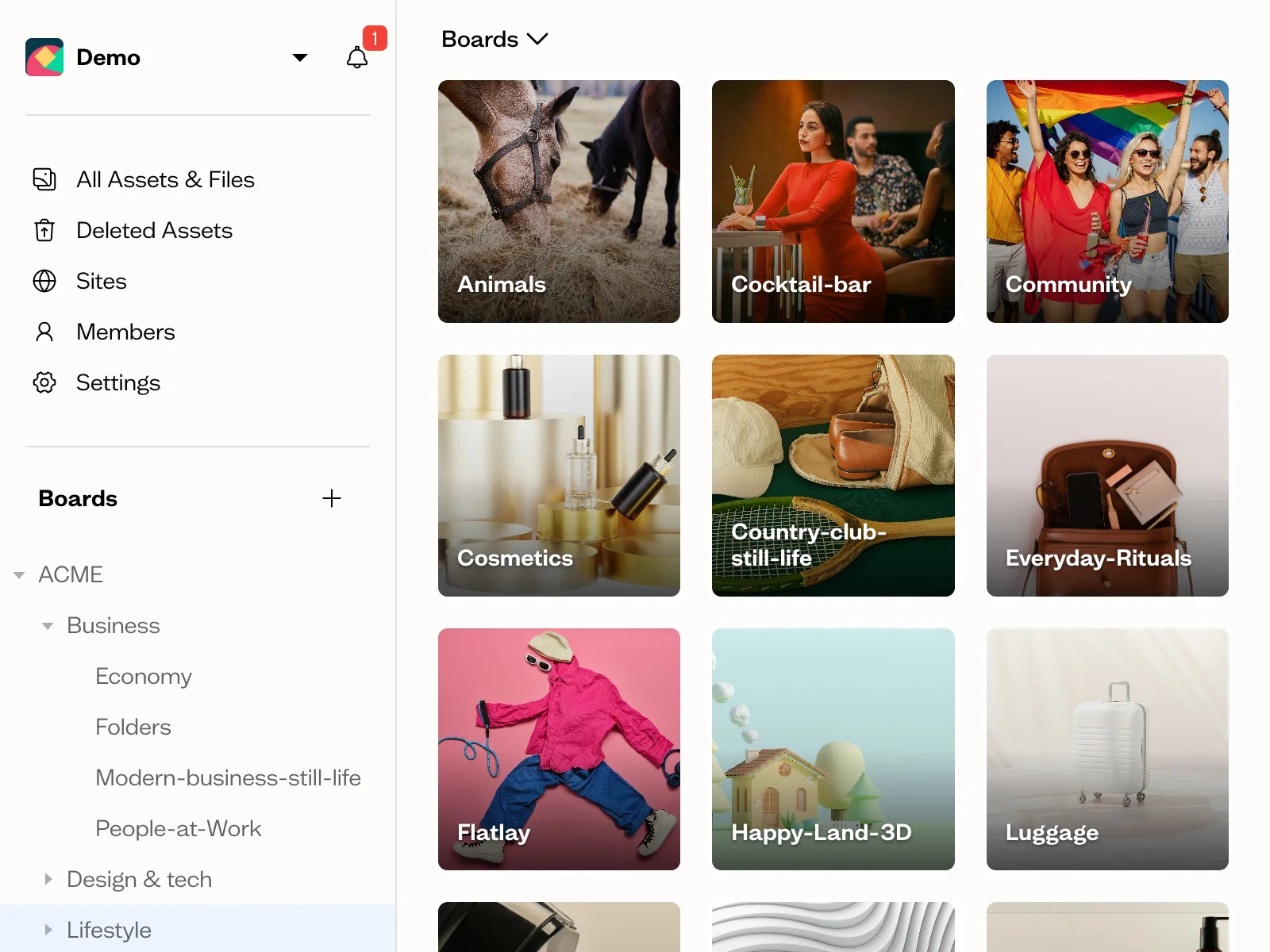
Where do the logo files actually live? Multi-brand means multiple sources of truth, and the failure mode is cross-contamination: brand A's typography in brand B's deck, a retired logo resurfacing because someone kept it locally. The fix is structural. One library per brand, with permissions that keep each brand's files with each brand's team.
How do guidelines stay separate per brand? Each brand needs its own book: its own colors, fonts, logo rules, photography direction, and even endorsed sub-brands need explicit rules for when the parent's mark appears. If you're documenting a brand from scratch, start with what a brand book contains; there's also a free brand guide template for a ready-made structure. The trap is maintenance: six brands means six living documents, and the moment one goes stale, that brand's team starts guessing.
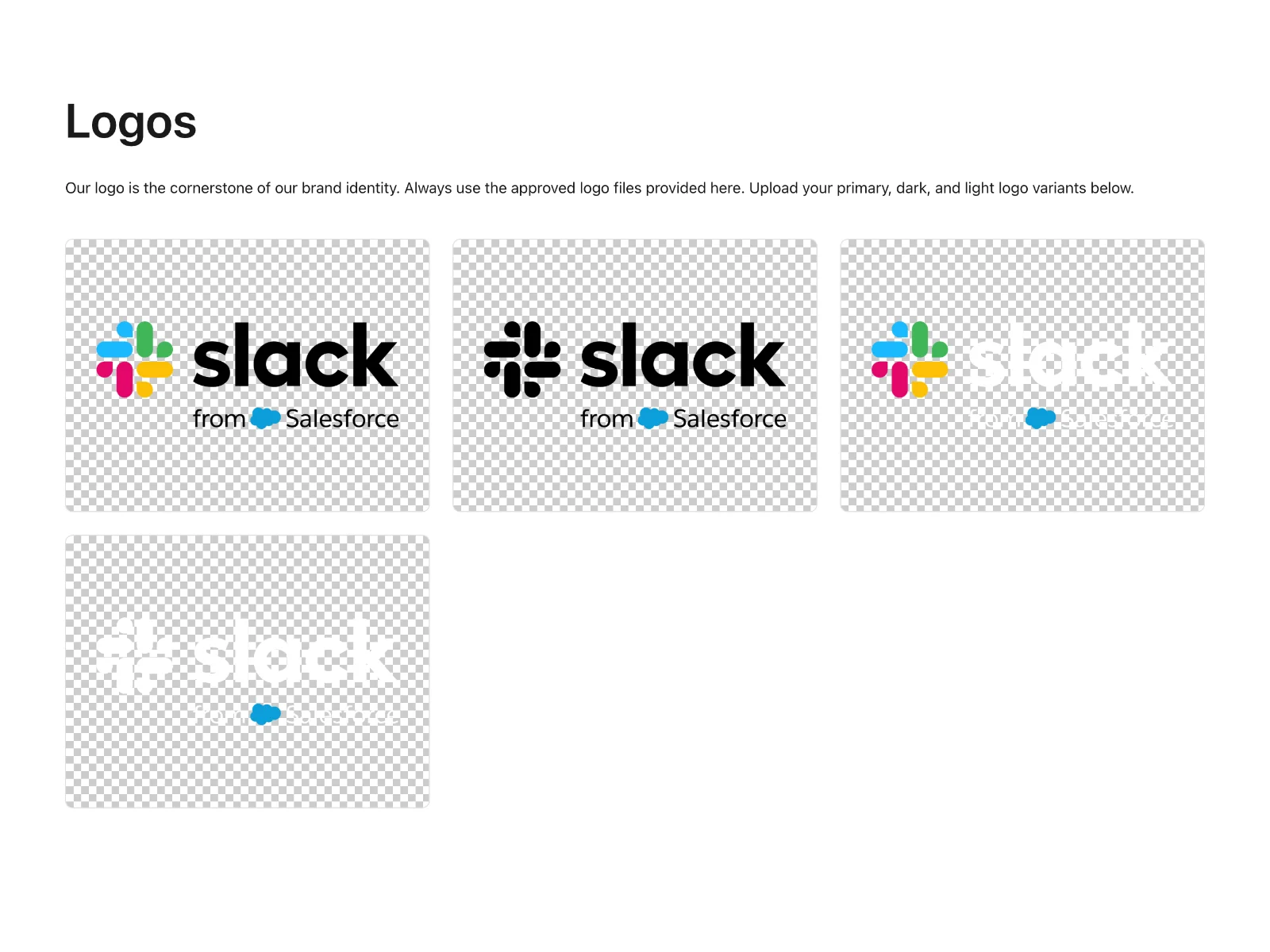
What happens at rebrand time? A rebrand in a multi-brand setup is controlled demolition. The new mark replaces the old everywhere, and everything that referenced the old assets has to update with it: portals, published guides, templates, the whole footprint. Version control decides whether the old logo resurfaces from a forgotten folder two years later, and whether the new one reaches every published page.
For agencies, every question above multiplies by the client roster. The pattern that works is isolation: each client gets their own library, guidelines, and approval chain, and the team moves between them without the brands leaking into each other. That setup belongs in onboarding, not in a later fix: who approves on the client side, which boards hold their assets, where their guidelines live. A structured client onboarding process is the natural place to record it.
How Baseline Supports Multi-Brand Teams
Baseline is a digital asset management platform that combines storage with direct publishing, which lines up with the operational questions above.
- Isolated workspaces: each brand or client gets their own library with specific permissions, guidelines, and approval workflows, so one team can serve many brands without the brands contaminating each other.
- Quick switching: you move between client libraries fast while confidentiality holds, and access groups keep teammates limited to the clients they work on.
- Guidelines that stay live: brand guides publish straight from the library, so each brand's rules update when its assets do instead of drifting stale.
- Rebrands that propagate: update an asset once and every published guide that references it refreshes, which turns rebrand propagation from a scavenger hunt into a setting.
You can start on the free plan and build this out brand by brand, with no trial countdown and no credit card.
Frequently Asked Questions
What is brand architecture in simple terms?
Brand architecture is how a company organizes the relationships between its brands: which offerings carry the master name, which get their own identities, and how trust flows between them. Any company with more than one product has one, designed or accidental.
What's the difference between a branded house and a house of brands?
A branded house puts one master name on everything, like Apple or Google. A house of brands runs many independent brands with the parent kept quiet, like Procter & Gamble with Tide and Pampers. The first concentrates marketing spend and risk in one name; the second buys precision and resilience at a multiplied cost.
What is an example of a hybrid brand architecture?
Alphabet above Google is the classic corporate hybrid: one famous consumer master brand, with a separate parent identity for the wider portfolio around it. Marriott runs a milder version of the same idea, with Courtyard by Marriott and Residence Inn keeping their own identities while carrying the Marriott name as an endorsement.
Can a company change its brand architecture?
Yes, and growing companies do it regularly. FedEx folded its acquired copy-shop chain into the portfolio as FedEx Office; Google reorganized under Alphabet when its businesses outgrew one consumer name. The moves are expensive, so they happen at structural moments, acquisitions, new markets, reorganizations, not casually.
Who is responsible for brand architecture?
A senior brand or marketing leader, with executive backing, because the decisions involved, what gets its own name, what gets funded, sit above any individual brand team. In agencies the responsibility repeats per client: each client brand needs its own owner and approval chain.
Get Started
Draw your current architecture on one page this week: master brand at the top, every product and sub-brand under it, marked as carrying the master name, standing alone, or endorsed. Compare the sketch against the five criteria above. Whatever it says you're doing, that's your real brand architecture, and it's easier to fix on paper than in a logo folder.
If you manage several brands or clients and want tooling that matches the structure, start free on Baseline and set up one library per brand: isolated workspaces, per-brand guidelines, and switching that keeps every brand's assets where they belong.
Related reading: brand governance for the decision rights behind multi-brand consistency, brand asset management for running multi-brand libraries day to day, and what is a brand book for the per-brand documentation itself.