
Every brand guide starts the same way: someone builds a beautiful PDF, exports it, and sends it around. Three months later, the logo's been refreshed, the PDF hasn't, and half the team is still pulling the old file because it's the one that's saved to their desktop.
That's the problem "living brand guidelines" actually solves, not a buzzword, a specific fix for a specific failure mode. Here's what it means in practice, why it matters more for agencies than anyone else, and what it looks like when it's working.
Last updated: September 12, 2026
What "Living" Actually Means
A living (or interactive) brand guide isn't a file, it's a page that pulls directly from wherever your actual brand assets live. Change the logo file at the source, and the guide shows the new one immediately, everywhere it's referenced. No re-export, no re-send, no version to track down.
A static PDF is a snapshot. A living guide is a window into the current state of your assets. The distinction matters because brand assets change constantly, guidelines rarely get updated in step with them, and the gap between the two is where inconsistency lives.
Why Static PDF Guidelines Fail, Especially at Agencies
The PDF format itself isn't the problem, it's what happens after export:
It's immediately a snapshot. The moment a PDF is exported, it stops reflecting reality. Every asset change after that point requires someone to remember to update the file, re-export it, and redistribute it, a step that gets skipped constantly.
Old copies never die. PDFs get saved to desktops, attached to onboarding emails, and forwarded between people. There's no way to recall an outdated copy once it's out, so old and current versions circulate side by side indefinitely.
Agencies multiply the problem. An in-house team has one PDF to keep current. An agency managing fifteen client brands has fifteen, each with its own update cadence, its own owner, and its own copies scattered across client and internal drives. The odds that all fifteen are current at any given moment are close to zero.
Rules and assets live apart. A PDF can describe a logo's clear space in words, but the actual logo file lives somewhere else, a DAM, a shared drive, an email attachment. Someone reading the guidelines still has to go hunt down the real file separately.
What Changes When Guidelines Are Live: A Concrete Example
Here's the mechanic, not the pitch. In Baseline, brand assets live on a board, the source of truth: current logo files, color values, type specs, photography.
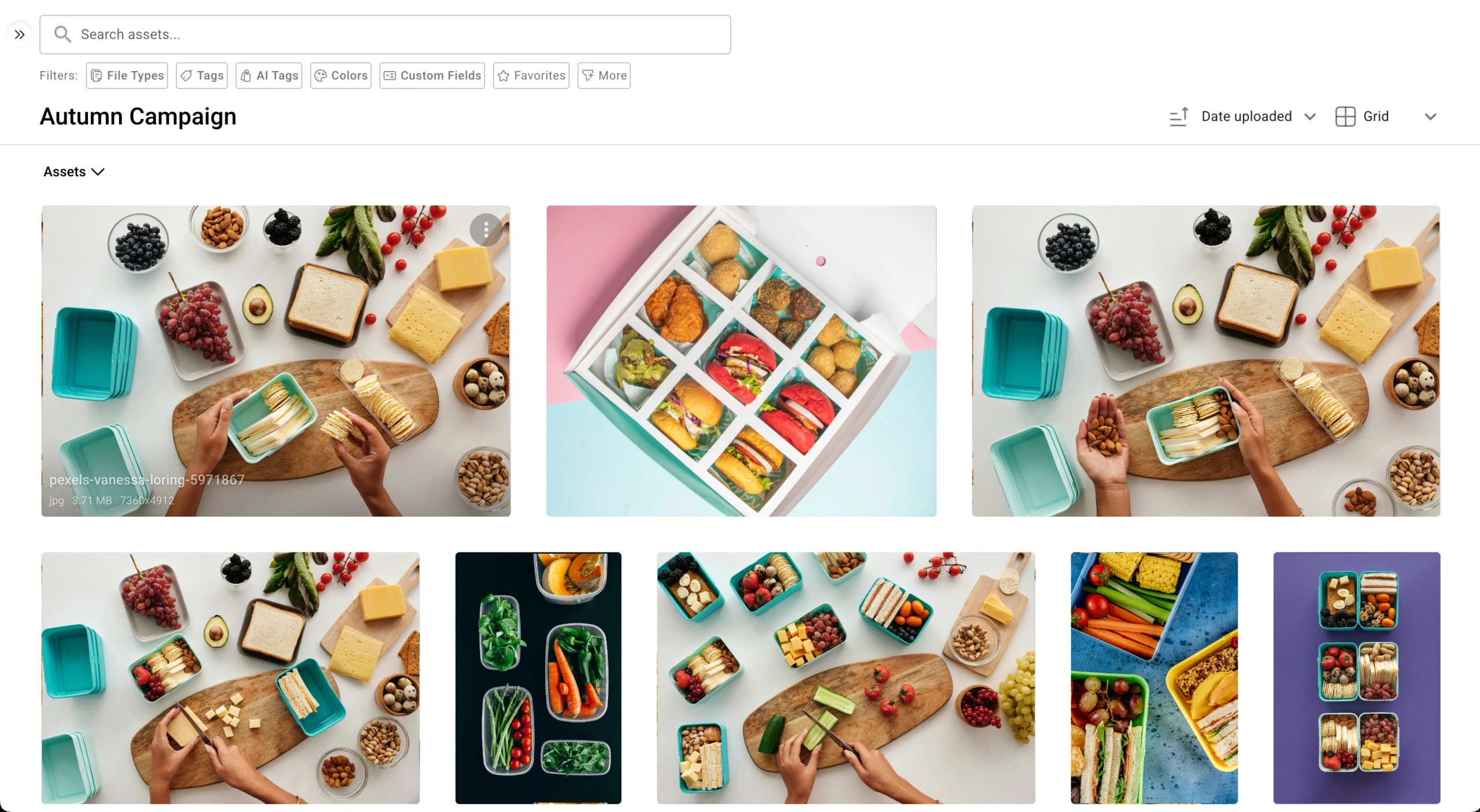
That board can publish directly as a brand guide, a public page that pulls its content from the board rather than a static export. When someone replaces the logo file on the board, whether it's a rebrand or just swapping in a higher-resolution export, the published guide shows the new file immediately. Nobody re-exports anything, because there was never a separate export to begin with, the guide and the source are the same data.
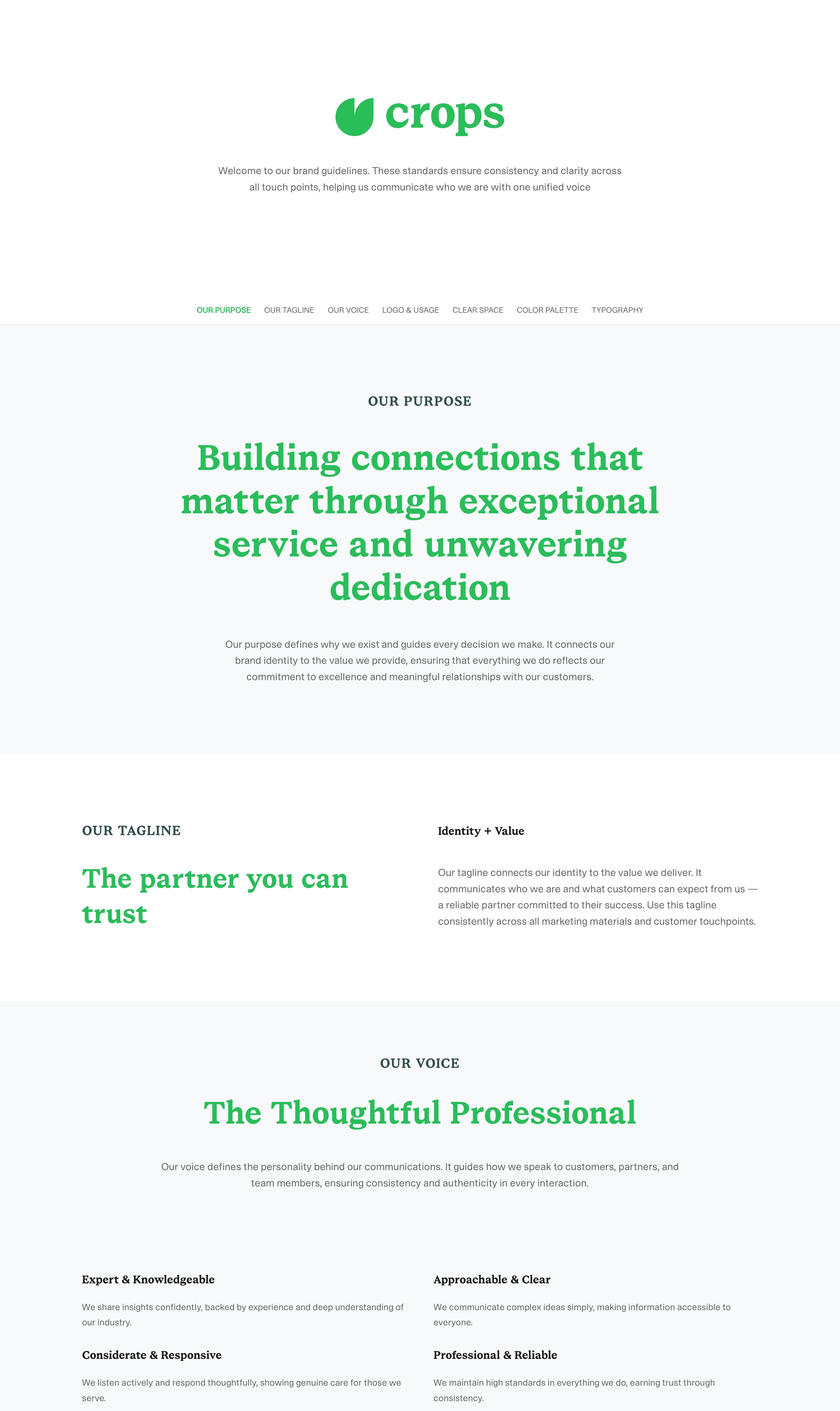
That's the entire mechanic. It's not a smarter PDF or a nicer viewer for a PDF, it's removing the export step completely so there's only ever one current version, and it's the one everyone sees.
How to Move From Static to Living
This is a subset of a bigger process. If you haven't audited what brand assets you actually have and where they live, start with the full brand asset management framework, audit, organize, govern, distribute, measure. The living-guidelines migration fits inside "distribute":
- Centralize the source files. A living guide can only be as current as the system it pulls from. If logo files are scattered across drives and inboxes, consolidate them into one place first.
- Retire the PDF as the reference copy. Keep it as an export for offline use if you need one, but stop treating it as the source of truth. The live page becomes that instead.
- Link guidelines to the actual files, not descriptions of them. "Primary logo: see attached" becomes a page where the current primary logo is right there, not described.
- Set access per audience. Internal teams, freelancers, and clients often need different views, or at least different permissions. A living system should support that without spinning up a separate document for each audience.
- Redirect old PDF links. If a PDF link is bookmarked somewhere, replace it with the live guide link so people land on the current version by habit, not the stale one.
Where Baseline Fits Into This

This is the specific thing Baseline is built around: the DAM board and the published brand guide aren't two systems kept in sync, they're the same data shown two ways. Update the source asset once, and it's current everywhere it's linked, no separate publishing step, no second file to remember.
For agencies, that means one brand guide per client, each pulling from that client's own board, each staying current without anyone manually re-exporting fifteen separate PDFs every time something changes. Share access per client with board guest roles (Editor or Commenter, scoped to one board), or hand out a share link for a quick, no-account view.
See how Baseline compares to Bynder, Canto, Frontify, and Air or what a brand kit should include if you're starting from scratch.
Frequently Asked Questions
What's the difference between living brand guidelines and a brand kit?
A brand kit is the collection of assets and specs (logos, colors, fonts). Living brand guidelines are how that kit gets presented and kept current, a page pulling from the real files rather than a static document describing them. See what is a brand kit for the asset side of this.
Do living brand guidelines replace a PDF entirely?
For the reference copy, yes. A PDF export can still be useful for offline situations or formal sign-off, but it shouldn't be the version people are expected to check for current standards. That role goes to the live page.
Is this the same as a brand portal?
Overlapping but not identical. A brand portal is often just a landing page for downloading approved assets. Living brand guidelines specifically means the guidance and the assets update together, from the same source, not just a nicer download page for files that could still go stale.
How much technical setup does a living brand guide require?
Little to none on tools built for it. The work is mostly organizational, centralizing the source assets, deciding on access per audience, before the tool that publishes them from a live source.
Does this work for multiple clients at an agency?
Yes, and it's where the difference matters most. Each client gets their own board and their own published guide pulling from it, rather than one shared document trying to serve everyone or fifteen separate PDFs drifting out of sync at different rates.
Get Started
If your brand guidelines are a PDF nobody's sure is current, see how a living guide works or check what it costs to move an agency off static files.
Try Baseline free | See pricing | Brand asset management framework