Your marketing team just used last year's logo. Sales is presenting with off-brand colors. A regional office launched a campaign with inconsistent messaging. These aren't isolated mistakes—they're symptoms of missing brand compliance systems.
Brand compliance is the process of ensuring every brand asset, message, and deliverable follows established brand guidelines — including logos, colors, typography, tone of voice, and approved templates — across all channels and team members.
This guide explains what brand compliance means, why it protects your brand equity, and how to build scalable systems that maintain consistency as you grow.

What Is Brand Compliance?
Brand compliance is the practice of ensuring every brand asset, piece of content, and deliverable precisely follows established brand guidelines. This means maintaining perfect adherence to your visual identity, messaging standards, and usage rules across all team members, departments, and channels.
Brand compliance encompasses four core components:
Core Components of Brand Compliance
| Component | What It Includes | Common Compliance Challenges |
|---|---|---|
| Visual Identity | Logos, color palettes, typography, image styles, icon sets | Managing multiple logo versions across departments, ensuring color accuracy, maintaining visual consistency |
| Brand Messaging | Tone of voice, key messages, taglines, value propositions | Ensuring consistent messaging across teams, markets, and channels |
| Asset Management | Approved photos, graphics, templates, design files, brand guides | Organizing assets so teams can instantly find current, approved files |
| Legal & Regulatory | Trademark usage, copyright compliance, industry regulations, licensed assets | Tracking usage rights, license expiration dates, and regulatory requirements |
The Visual Asset Challenge
Here's what most discussions about brand compliance miss: the majority of compliance failures stem from visual asset problems. Wrong logo versions. Off-brand colors. Outdated design files. Unlicensed photography. Inconsistent image styles.
Properly managing your brand assets is critical to maintaining compliance. When a team member creates a deliverable, they need immediate access to:
- The current approved logo (not last year's version)
- Exact color codes (not approximate shades)
- On-brand photography (not generic stock photos)
- Approved templates (not recreated designs)
- Current brand guidelines (not outdated PDFs)
Without a system that makes accessing the correct visual assets easier than using the wrong ones, brand compliance becomes a daily struggle. As organizations grow and more people create branded content, this problem multiplies.
Why Brand Compliance Matters
Brand compliance isn't just about following rules—it's about protecting your brand equity and enabling growth. Here's why it matters:
1. Builds Brand Trust and Recognition
81% of consumers need to trust a brand before they buy. Brand trust doesn't come from flashy campaigns—it comes from consistent, recognizable brand experiences across every touchpoint.
When your visual identity stays consistent—same logo, same colors, same style—customers learn to recognize and trust your brand instantly. Inconsistency erodes that recognition and trust.
2. Protects Brand Equity
Your brand is one of your most valuable assets. Every off-brand deliverable—wrong logo usage, incorrect colors, inconsistent messaging—chips away at the equity you've built. Strong brand compliance protects the investment you've made in building brand recognition and trust.
One regional marketing agency lost a $200K annual client after repeatedly using an outdated logo version in quarterly campaigns. The client didn't see it as an honest mistake—they saw it as carelessness with their brand identity. That's the real cost of poor compliance.
3. Reduces Legal Liability
Using unlicensed images, violating trademark guidelines, or misusing copyrighted materials creates legal exposure. Brand compliance systems help you:
- Track licensing rights and expiration dates
- Ensure trademark usage follows legal guidelines
- Maintain an audit trail of asset approvals
- Prevent unauthorized brand modifications
When compliance issues create legal problems, the financial and reputational damage can be severe.
4. Maximizes Team Efficiency
Poor compliance means constant rework. Designers rebuild files because they can't find approved templates. Marketing teams spend hours hunting for the correct logo version. Brand managers repeatedly explain the same guidelines.
Strong brand compliance eliminates this waste. When teams can instantly access the right assets and guidelines, they spend time on productive creative work instead of correcting preventable mistakes.
According to research on digital asset management benefits, organizations using centralized brand management systems save an average of 8-12 hours per week on file searches and compliance corrections alone.
5. Enables Scaling Across Markets
As organizations expand—adding new departments, regional offices, or international markets—brand compliance becomes exponentially more important. Without systematic compliance, brand consistency breaks down as more people create content.
Strong compliance systems scale with your organization, ensuring brand standards remain consistent whether you have 10 employees or 10,000.
Common Brand Compliance Challenges
Most organizations struggle with similar compliance challenges:
1. Version Control Across Departments
Brands evolve. New logos. Refreshed color palettes. Updated messaging. But when new brand assets are released, outdated versions don't automatically disappear. Teams unknowingly use last year's logo because it's still sitting in their shared drive.
Without systematic version control, old assets continue circulating long after they should be retired.
2. Scattered Asset Storage
Marketing saves files in Google Drive. Sales uses Dropbox. Product team members save working files locally. Different departments use different tools, creating fragmentation that guarantees compliance failures.
When finding the correct asset requires checking three different locations, teams use whatever's convenient—which is often wrong.
3. Remote and Distributed Teams
Remote work amplifies compliance challenges. When team members work from different locations, time zones, and without direct oversight, ensuring everyone accesses current brand standards becomes harder.
Distributed teams need self-service access to brand assets and guidelines—but most organizations still rely on emailing files or hoping people remember where things are saved.
4. Lack of Clear Usage Guidelines
Many organizations have brand assets but no clear usage rules. Which logo version for which context? What color treatments are acceptable? What image styles align with the brand?
Without documented, accessible guidelines, teams make assumptions that lead to off-brand work.
5. Outdated Assets Still in Circulation
Old logos lurking in shared drives. Outdated templates saved in design tools. Previous color palettes referenced in old documents. These zombie assets create compliance risks every day.
Unless you actively archive outdated materials, teams will continue finding and using them.
6. New Employee Onboarding
New team members don't know where brand assets live, which files are current, or what the brand guidelines say. Without systematic onboarding into brand standards, new hires make predictable compliance mistakes.
7. Scaling Compliance as You Grow
Manual compliance checks work for small teams. But as organizations grow beyond 20-30 people creating branded content, human oversight becomes impossible. You need systems that scale with your team size.
Brand Compliance vs Brand Consistency vs Brand Governance
These terms often get confused. Here's how they relate:
Brand Consistency is the outcome—a uniform brand experience across all touchpoints, channels, and markets. It's what customers experience.
Brand Compliance is the process—the systems, tools, workflows, and training that enable consistency. It's what teams do to achieve consistency.
Brand Governance is the framework—the policies, rules, ownership, and decision-making structure around brand management. It defines who can make brand decisions and how.
Think of it this way: governance sets the rules, compliance enforces the rules, and consistency is the result when compliance works.
Who Is Responsible for Brand Compliance
Brand compliance isn't one person's job—it's a shared responsibility:
Brand/Marketing Teams: Own brand guidelines, maintain the asset library, train others on brand standards, and monitor compliance.
Creative Teams: Execute brand standards in all design work, flag unclear guidelines, and help refine brand systems based on practical usage.
All Content Creators: Follow brand guidelines, access approved assets, ask questions when uncertain, and report compliance issues they notice.
Leadership: Invest in compliance systems, enforce brand standards, and model compliance in their own work.
Strong brand compliance requires both top-down support (leadership commitment and investment) and bottom-up execution (every team member following guidelines).
How to Achieve Brand Compliance: 8 Practical Steps
Here's how organizations maintain strong compliance as they grow:
Step 1: Centralize All Brand Assets in a DAM System
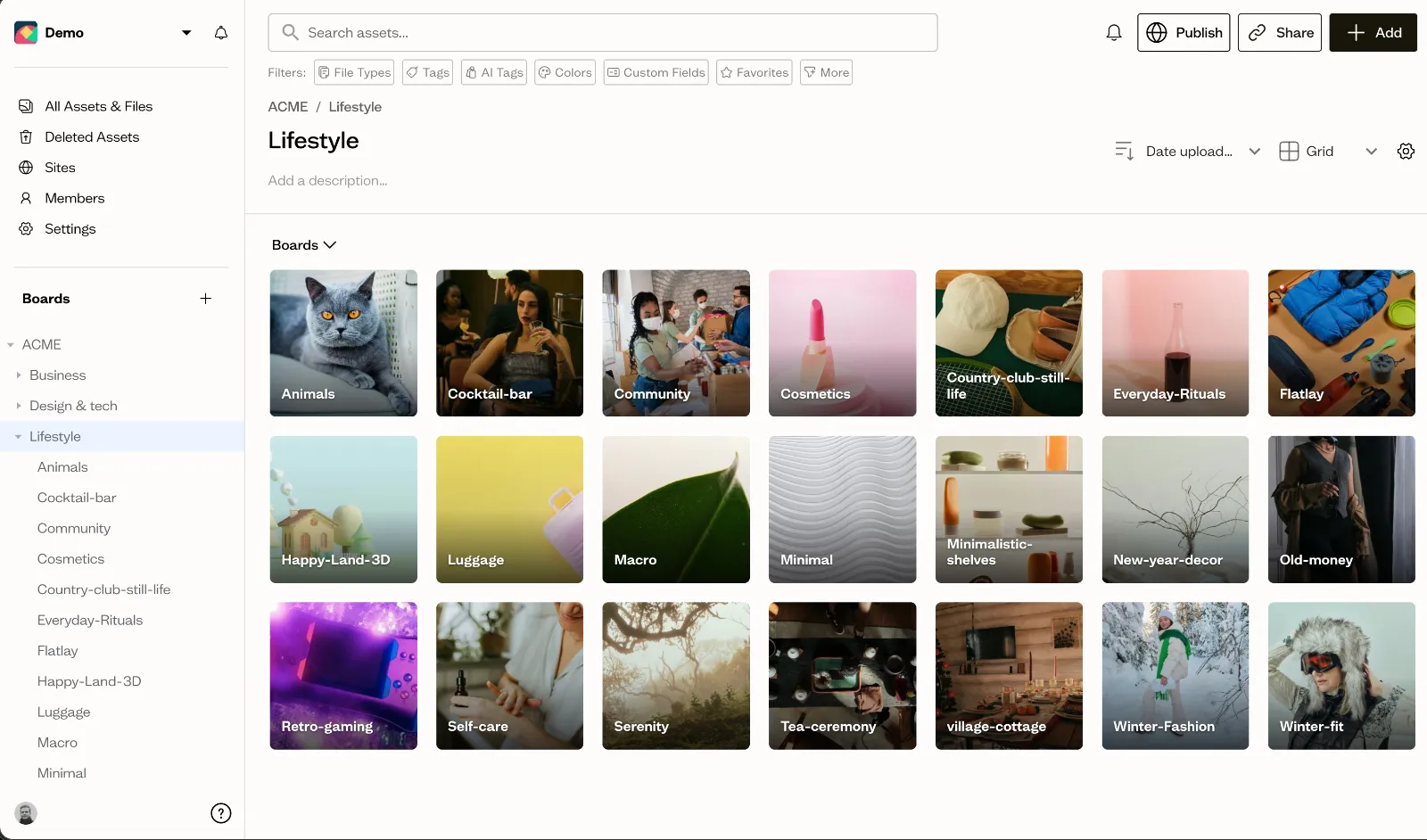
Scattered files guarantee compliance failures. The solution is a centralized digital asset management system where all brand assets live in one searchable, organized platform.
A proper DAM system should:
- Organize assets with clear tags and board structures
- Provide instant search across thousands of files
- Control access based on team member roles and departments
- Track version history so you always access the current file
- Sync updates automatically across all touchpoints
Baseline organizes brand assets with visual-first search and organization, ensuring teams can find the right file in seconds. Update a logo once, and it automatically syncs everywhere—no more tracking down outdated files across multiple locations.
Step 2: Store Comprehensive Brand Guidelines
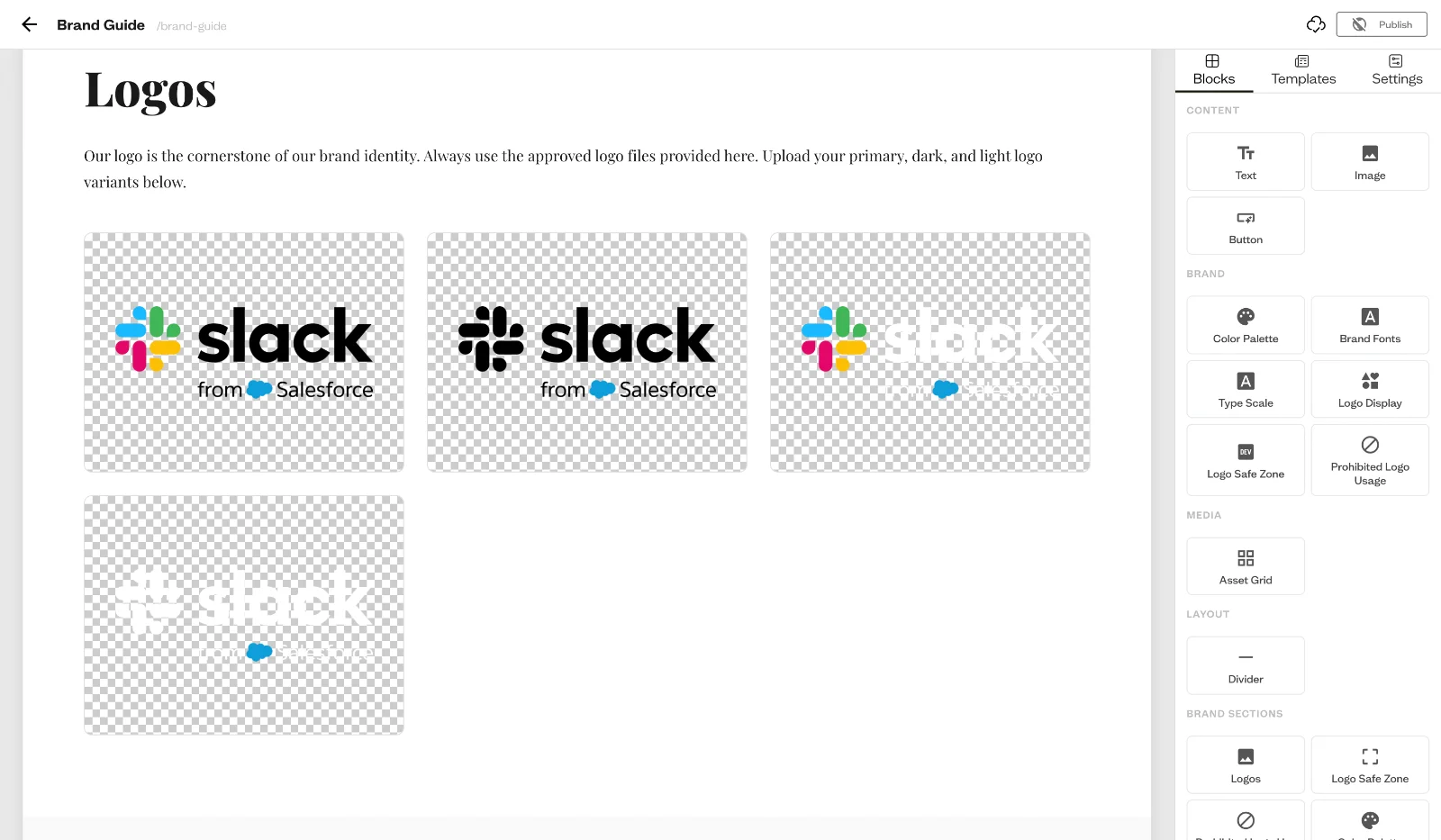
Brand guidelines should live in the same system as your brand assets. When designers need a logo, they should also see the exact guidelines for using it—all in one place, always current.
Modern brand management goes beyond static PDF guidelines. Baseline publishes your brand guidelines as live, dynamic brand guides that update automatically when you change assets. Your team always references current brand standards, not outdated documents.
Step 3: Implement Visual Asset Controls
Most compliance issues involve visual assets, so focus your systems here:
Color Palette Enforcement: Store exact hex codes, Pantone references, and CMYK values. Make it easier to copy the correct code than to guess.
Logo Version Control: Organize every logo variation (primary, secondary, monochrome, reversed, etc.) with clear usage guidelines for each. Remove outdated versions entirely so they can't be accidentally used.
Image Style Consistency: Tag and organize photography by style, so designers can quickly find on-brand images that match your visual language.
Typography Management: Store approved font files with usage guidelines. Link to where team members can download licensed fonts properly.
Step 4: Set Up Approval Workflows
Implement systematic reviews before content goes public:
Internal Brand Review: Assign experienced team members to review work for brand compliance before publication. Build this into your content timelines.
Approval Processes: Use your DAM system to share work for approval, collecting feedback and sign-offs in one organized location.
Template Systems: Create approved templates for common deliverables (social graphics, presentation decks, email headers). Teams can customize content while maintaining brand compliance.
Step 5: Use AI-Powered Asset Tagging
Managing thousands of assets requires automation. AI-powered tagging analyzes assets during upload and automatically generates descriptive metadata based on visual content:
What AI auto-tagging handles:
- Objects and subjects (people, products, buildings, landscapes)
- Scenes and settings (outdoor, office, urban, indoor)
- Colors and color palettes detected in the image
- Faces and people recognition
- Text extraction via OCR (for documents and images with text)
- Visual style and composition
- File format and technical metadata
What requires human input:
- Campaign or project names
- Department or team assignments
- Approval status and usage rights
- Market region or intended use
- Business-specific terminology
- Brand context and strategic metadata
The most effective approach combines AI-generated visual tags with a small set of required manual fields for business context. AI handles the baseline metadata instantly, while team members add the business layer that only humans can provide. This hybrid approach delivers 80-90% of metadata automatically while preserving the context that makes assets truly searchable.
Step 6: Train Your Team (and Clients)
Technology enables compliance, but people ensure it. Regular training matters:
New Team Member Onboarding: Show every new hire, client, freelancer, or simply anyone working with your brand, where brand assets live, how to access them, and why brand compliance matters. Make brand training part of standard onboarding.
Brand Guideline Training: When you update brand guidelines, train all content creators on what changed and why. Don't assume people will read updated documentation—walk them through it.
Regular Brand Reviews: Schedule quarterly reviews of brand standards across the organization. This catches guideline drift and ensures knowledge stays current.
Document Everything: When someone asks a brand question, document the answer in your brand guidelines. Build institutional knowledge into the system.
Step 7: Conduct Regular Brand Audits
Proactive auditing prevents compliance drift:
Quarterly Asset Reviews: Review published work quarterly. Look for:
- Outdated logo usage
- Color inconsistencies
- Off-brand imagery or messaging
- Files that should be archived
Template Audits: Check that approved templates still match current brand guidelines. Update or retire outdated templates before they get used.
License Compliance: Review licensed assets (stock photos, fonts, music) to ensure licenses remain current and usage stays within terms.
Step 8: Monitor and Measure Compliance
Track metrics to identify where compliance breaks down:
- How often do team members access correct vs. outdated assets?
- Which departments see the most compliance issues?
- Which team members need additional brand training?
- What types of assets cause the most confusion?
- How long does it take teams to find approved assets?
Use these insights to improve your systems and training over time.
How to Measure Brand Compliance
You can't improve what you don't measure. Track these compliance metrics:
Compliance Issue Frequency: Count how often off-brand materials get published. Track trends over time—are issues increasing or decreasing?
Asset Usage Analytics: Use your DAM system to track which assets get accessed most, which sit unused, and whether teams access current vs. outdated versions.
Time to Find Assets: Measure how long it takes team members to find the assets they need. Long search times indicate organizational problems that lead to compliance failures.
Brand Audit Results: Conduct quarterly brand audits and score compliance across published materials. Track improvement over time.
Stakeholder Feedback: Survey teams quarterly about how well brand compliance systems work for them. Ask what's frustrating, what's working, and what they need.
Brand Compliance Software: Essential Features
Look for these features when choosing brand compliance software:
Must-Have Features
Centralized Storage: All brand assets in one searchable platform, not scattered across multiple tools.
Version Control: Automatic tracking of every version of every asset. Clearly mark which version is current, and archive outdated materials.
Role-Based Permissions: Control who can access, edit, or delete assets based on their role and department.
Published Brand Guidelines: Don't just store brand assets — publish them as accessible, always-current documentation alongside assets.
Integration with Design Tools: Connect with Adobe Creative Cloud, Figma, Canva, and other tools your team uses daily.
AI-Powered Search: Automatically tag and categorize assets. Make finding the right asset faster than using the wrong one.
Asset Analytics: Track which assets get used, how often, and by whom. Identify compliance patterns and gaps.
How Baseline Helps Organizations Maintain Compliance
Baseline helps organizations manage brand compliance with visual-first asset management:
- Visual-First Organization: Organize and search thousands of images, logos, and design files with AI-powered tagging and visual search
- Published Brand Guides: Your asset library doesn't just store files—it publishes them as beautiful, dynamic brand guides teams can access
- Version Control: Track every version of every asset, with clear indicators of what's current and what's archived
- Transparent Pricing: Clear, predictable pricing that scales with your organization—no hidden fees or surprise charges
- Fast Search: Find any asset in seconds with smart search that understands visual characteristics
Real-World Brand Compliance Examples
Example 1: The Logo Version Crisis (Failure)
A mid-market technology company refreshed their logo in Q1, distributing new files to all departments. But the old logo remained in shared drives across the organization. In Q3, the sales team used the outdated logo in a major industry presentation.
The mistake wasn't caught until after 500+ conference attendees saw the presentation. The company had to:
- Send correction emails to attendees
- Update all conference follow-up materials
- Retrain sales team on brand compliance
- Conduct an audit of all shared drives
The incident damaged brand credibility during a critical market expansion.
What would have prevented this: A DAM system with automatic version control would have archived the old logo when the new version was uploaded, making it impossible to accidentally use outdated assets.
Example 2: Centralized Asset Management (Success)
A growing SaaS company with 200 employees implemented Baseline's DAM system to centralize brand assets. Previously, brand files lived in Google Drive, Dropbox, and individual computers.
After centralization:
- Average time to find brand assets dropped from 12 minutes to under 1 minute
- Brand compliance issues decreased 73% over six months
- New employee onboarding time for brand standards reduced from 3 hours to 30 minutes
- Marketing team saved 10+ hours per week previously spent finding and sharing assets
Example 3: Published Brand Guidelines (Success)
A retail brand with international operations struggled to keep brand guidelines current across markets. They published static PDF guidelines, but updates required redistributing files to dozens of teams.
After implementing Baseline's published brand guides, their brand guidelines became dynamic and always-current. When brand assets changed, the published guide updated automatically. Regional teams always referenced current standards.
Compliance issues related to outdated guidelines dropped 91% in the first year.
Brand Compliance for Agencies Managing Multiple Clients
Agencies face unique brand compliance challenges that in-house teams rarely encounter. Managing perfect compliance across multiple client brands simultaneously requires specialized systems and workflows.
Unique Agency Challenges
Multi-Client Asset Confusion: The biggest risk for agencies is accidentally using Client A's assets for Client B. When managing similar industries or visual styles across multiple clients, the potential for confusion multiplies. One misplaced logo can destroy a client relationship.
Version Control Across Brands: Tracking brand changes across 15+ client brands becomes overwhelming without systematic version control. Clients update guidelines regularly, and agencies must track every change for every brand.
Freelancer and Contractor Access: Agencies rely on freelancers and contractors. How do you give them access to only the assets they need for their specific client project without exposing all client files?
Client Portals: Clients need access to their own brand assets without seeing other clients' work. Agencies need secure, client-specific brand portals.
How Agencies Maintain Multi-Client Compliance
Successful agencies managing dozens of client brands share these practices:
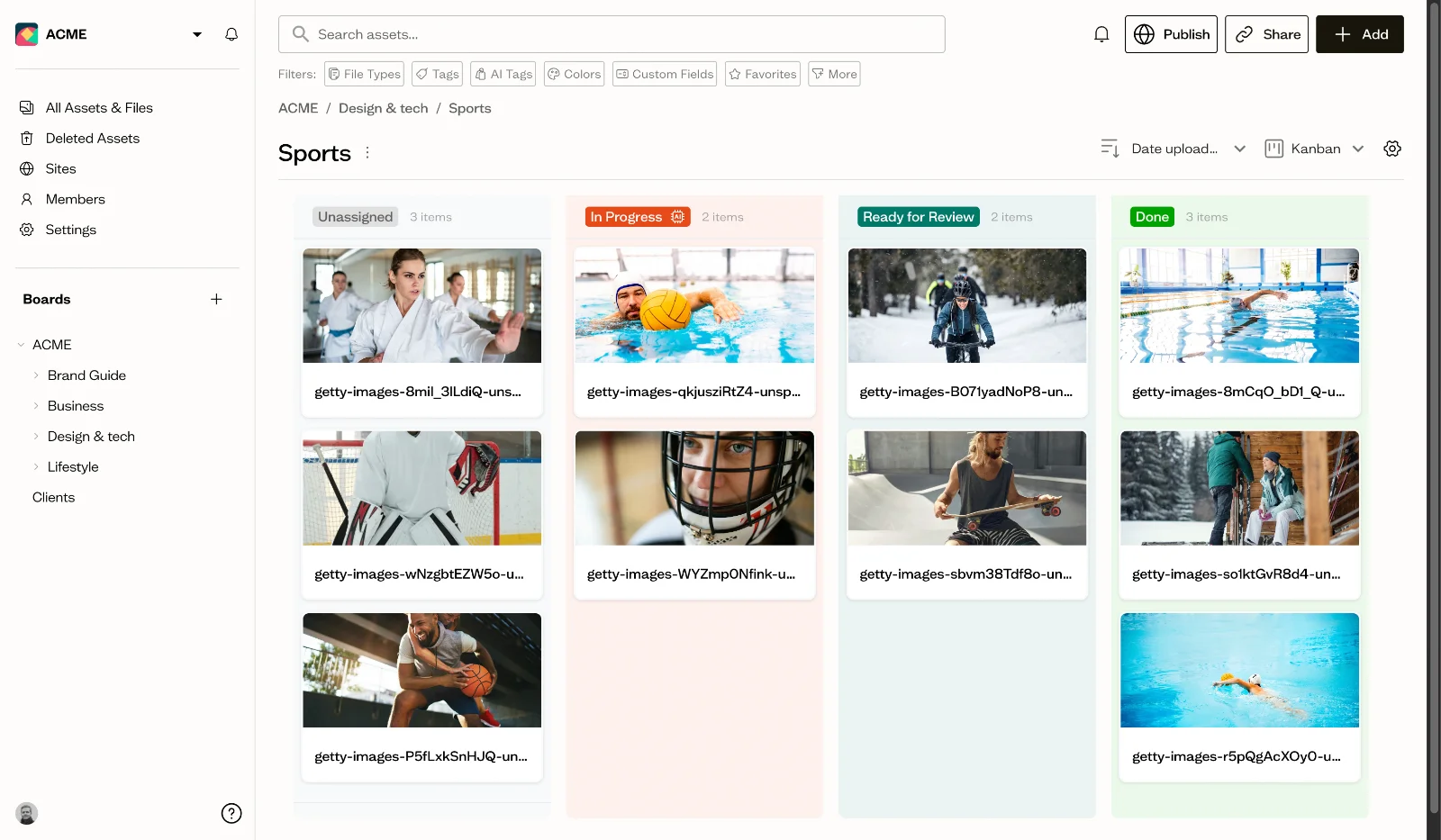
Separate Client Workspaces: Use DAM systems that support client-specific workspaces or boards with independent assets, guidelines, and access controls. Never mix client assets in shared folders.
Granular Permission Controls: Grant team members access only to their assigned clients. Set up role-based permissions that prevent cross-client asset confusion.
Client-Facing Brand Portals: Provide clients with secure access to their assets and guidelines. This reduces "can you send me the logo?" emails and ensures clients access current materials.
Dedicated Account Managers: Assign specific team members to own brand compliance for each major client. They become the brand guardians for that client's work.
Baseline for Agencies: Baseline supports multi-client management with separate boards for each client brand, granular access controls, and published brand guides clients can access. Agencies can manage dozens of client brands from one platform without risk of cross-contamination.
Frequently Asked Questions About Brand Compliance
What is brand compliance?
Brand compliance is the process of ensuring every brand asset, message, and deliverable follows established brand guidelines — including logos, colors, typography, tone of voice, and approved templates — across all channels and team members.
Why is brand compliance important?
Brand compliance protects brand equity, builds customer trust, reduces legal liability, eliminates wasted time on rework, and enables scaling across markets. Consumers need to trust a brand before they buy—consistent brand experiences build that trust.
How do you ensure brand compliance?
Centralize all brand assets in a digital asset management system. Publish clear, accessible brand guidelines. Implement version control and approval workflows. Train team members regularly. Conduct quarterly brand audits to identify and fix compliance gaps.
What tools help with brand compliance?
Digital asset management (DAM) systems with features like centralized storage, version control, published brand guidelines, role-based permissions, and AI-powered search. Baseline provides all these features in one platform designed for visual brand management.
What's the difference between brand compliance and brand consistency?
Brand consistency is the outcome—a uniform brand experience across all touchpoints. Brand compliance is the process—the systems, tools, and workflows that enable consistency. You need compliance to achieve consistency.
How do you measure brand compliance?
Track compliance issues over time, run quarterly brand audits, monitor asset usage analytics in your DAM, gather stakeholder feedback on brand execution, and measure how quickly teams find approved assets.
What is the difference between brand compliance and brand management?
Brand management covers the full lifecycle—strategy, identity development, guidelines, asset creation, and distribution. Brand compliance is the enforcement layer: systems and processes that ensure every output follows established standards.
How does brand compliance scale as organizations grow?
Manual compliance checks fail as organizations grow beyond small teams. Scalable compliance requires automated systems: centralized asset management, role-based permissions, version control, approval workflows, and compliance monitoring.
Maintaining Brand Compliance at Scale
Brand compliance becomes exponentially harder as organizations scale—but it's also exponentially more important. The difference between organizations that grow successfully and those that struggle with brand inconsistency often comes down to systematic brand management.
Organizations that maintain strong compliance share common characteristics: they centralize all assets in dedicated systems, they make accessing correct assets easier than using wrong ones, and they build compliance into workflows rather than treating it as a final check.
Baseline helps organizations manage brand compliance at scale. Organize visual assets with AI-powered search, publish dynamic brand guides, and give your team instant access to the right assets for every project.
See how Baseline can transform your brand compliance. Start free or explore how Baseline works. For the broader practice this sits inside, see brand asset management: a practical framework for agencies.